
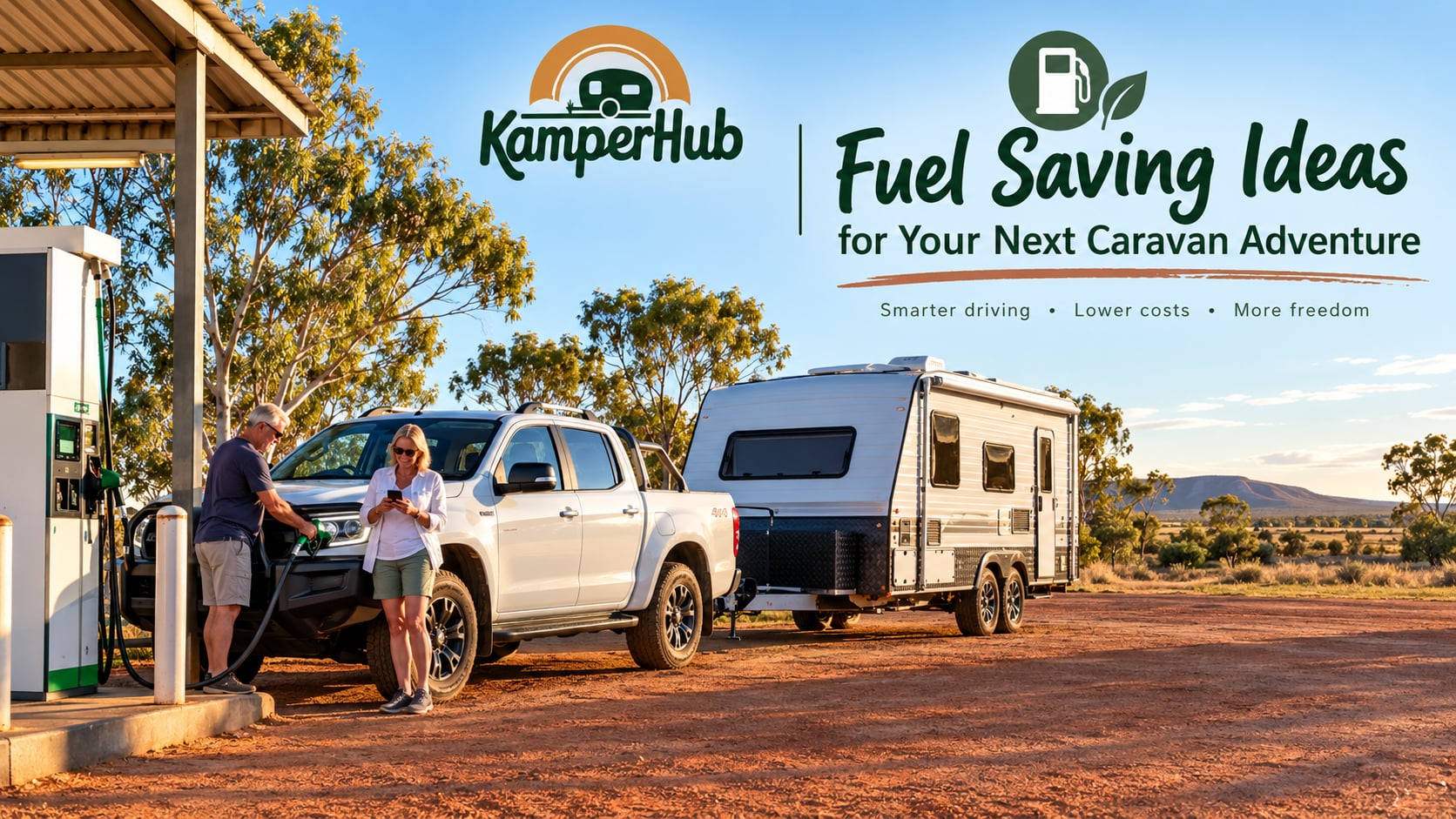
Diesel Near $2.90: How to Keep Caravanning Without Blowing the Fuel Budget
Fuel Is Changing How Australians Caravan
Caravan insurer CIL said in July that rising fuel prices are changing how its customers travel — shorter itineraries, shorter distances and destinations closer to home. The Caravan Industry Association's 2026 State of Industry report flags elevated fuel prices as an emerging challenge, even as demand stays strong: 17.3 million caravan and camping trips last year and almost 938,000 registered RVs.
The numbers back it up. Across the roughly 10,000 NSW, QLD and WA servos in KamperHub's live fuel price feed this week, the median price is:
- Diesel: $2.87 per litre
- Unleaded: $2.40 per litre
Towing at 15L/100km, every 1,000 km now costs about $430 in diesel. A 5,000 km winter run north is over $2,100 in fuel alone.
We've already covered how to use less fuel behind the wheel — tyre pressures, speed, smooth driving — in our Top 10 Fuel-Saving Tips for Caravan Travel. This guide is about the bigger lever: planning a trip that needs less fuel in the first place, and paying less for the fuel it does need.
1. The Cheapest Kilometre Is the One You Don't Drive
Planning your next road trip?
KamperHub helps you plan routes, track weights, and travel with confidence. Free to use — no credit card required.
Get Started FreeNo driving technique saves as much as simply covering fewer kilometres. That doesn't have to mean a shorter holiday — it means fewer moves.
Compare two four-week trips:
- Moving every second day: about 3,000 km of towing
- Base camping for 4–5 nights at a time: about 2,000 km of towing
That 1,000 km difference is roughly 150 litres of diesel — around $430 at today's prices — and you get more time actually enjoying each place.
How to do it: pick a base, set up once, and explore with the tow vehicle unhitched. Your car uses far less fuel without 2.5 tonnes behind it. In KamperHub, a Journey's "Day trip from here & back" leg routes you out and home to the same base, so you can plan several day trips from one campsite before you move on.
2. Choose the Route, Not Just the Destination
Two routes between the same towns can differ by tens of kilometres — and a hilly road costs more fuel than a flat highway of the same length.
When you plan a start-to-destination trip in the Route Planner, KamperHub shows the alternative routes as cards with distance, drive time and estimated fuel cost side by side, so you can pick the cheaper one before you leave. It's free on every plan.
If your trip has several stops, the Optimise Stop Order button reorders the in-between stops to cut total distance — handy when you've added places in the order you thought of them rather than the order that makes sense on a map.
3. Don't Fill Up at the First Servo You See
Fuel prices vary a lot even within the same town. We compared diesel prices between servos in the same local area (roughly 10 km across) this week:
- In a typical area, the cheapest and dearest servo are 12 cents a litre apart
- In one area in four, the gap is 19 cents a litre or more
- WA had the widest local gaps — a typical spread of 19 cents
On an 80-litre fill, 12 cents is about $10. Over a 3,000 km trip (around 450 litres), choosing well every time is worth $50–$85 — not a fortune, but it costs nothing except a quick look before you pull in.
Remote fuel costs more, too. When we measured stations more than 400 km from a capital city, they averaged about 5% above city prices nationally — and around 12% in WA. Fill up in the last big town before a remote stretch, not at the last-chance servo.
Free tools: FuelCheck (NSW), FuelWatch (WA) and the RACQ fuel price finder (QLD) all show live prices. KamperHub Pro members get live NSW, QLD and WA prices on the stations along their route in the fuel stops planner.
4. Travel Lighter on Long Legs
Weight costs fuel, especially on hills. The easiest weight to lose is water: 100 litres of fresh water is 100 kg. If your next camp has drinkable water, travel with the tank part-full and top up when you arrive.
Before your trip, KamperHub's Pre-Departure "Confirm your load levels" card lets you set your fresh water, gas and fuel can levels, so your weight check reflects what you're actually carrying rather than assuming everything's full.
5. Budget the Fuel Before You Leave
A fuel bill is only a shock if you didn't see it coming. Before you lock in an itinerary, cost it:
- Work out your total towing distance
- Use your real towing consumption — check your trip computer on your last few towing trips, not the solo figure
- Use today's price for your fuel, not last year's
KamperHub's Trip Cost estimator (Explorer) and the Route Planner's fuel step both let you type in your own price per litre, and they remember it for next time. With diesel near $2.90, it's worth checking — an estimate based on an old price will come in low, and a low estimate is the one that leaves you short halfway up the coast.
The Bottom Line
The grey nomads cutting trips short are responding to a real cost — but shortening the holiday isn't the only option. In order of impact:
- Drive fewer kilometres — base camp and day-trip instead of moving every day or two
- Pick the cheaper route — compare fuel cost, not just drive time
- Fill up smarter — check prices locally and fill before remote stretches
- Travel lighter — especially water
- Budget it up front — with your real consumption and today's price
Combine those with the driving habits in our fuel-saving tips and you can keep the trip — and the budget.
Plan Your Trip with KamperHub
KamperHub's Route Planner shows the fuel cost of each route option, plans overnight stops around your daily driving limit and works out where you'll need to refuel — free to use.
Sources
- CIL / Suncorp Group — Fuel prices reshape Grey Nomad travel plans (July 2026)
- Caravan Industry Association of Australia — Caravan and Camping State of Industry 2026 Report
- KamperHub live fuel price data (NSW FuelCheck, QLD Fuel Price Reporting, WA FuelWatch), week of 5 October 2026
- FuelCheck NSW · FuelWatch WA · RACQ Fuel Prices
Join the Conversation
Found this helpful? Try KamperHub — it's free
Weight tracking, trip planning, and towing compliance — all in one app.
KamperHub Team
Helping travellers tow safely and confidently. KamperHub provides tools for trip planning, weight compliance, and adventure management.
Plan Your Next Caravan Adventure with KamperHub
Trip planning, weight tracking, fuel management, and more. Everything you need for safe and confident towing.
Get Started Free