
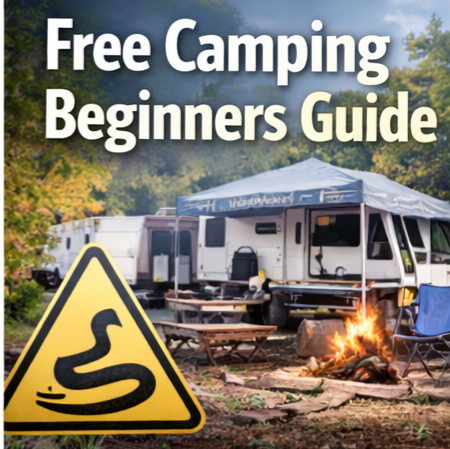
Free Camping in Australia: A Beginner's Guide to Finding Safe, Legal Spots
There's a moment every Australian tourer remembers: the first time you pull into a quiet bush camp at sunset, crack open a cold one, and realise you're not paying a cent. No powered site fees, no camp kitchen queues, no reversing into a spot while twelve people watch. Just you, the bush, and a sky full of stars. Free camping is one of the genuine joys of caravan travel in Australia — but if you're new to it, the whole thing can feel a bit murky. Where can you actually camp? Is it legal? Will you get fined? And what happens when you need the toilet at 2am and there's nothing but scrub?
This guide will walk you through everything you need to know to start free camping safely, legally, and without annoying the locals or wrecking the bush for the next person.
What Free Camping Actually Means
Let's clear something up straight away: free camping doesn't mean rocking up to a caravan park and refusing to pay. It refers to camping in locations where no fees are charged — and that covers a surprisingly wide range of spots across Australia.
Some people call it bush camping, wild camping, or boondocking (that's the American term creeping into Australian forums). Whatever you call it, the idea is the same: you're camping outside of commercial campgrounds, usually without powered sites, and often without any facilities at all.
Free camping exists on a spectrum. At one end, you've got well-maintained council rest areas with toilets, picnic tables, and even dump points. At the other end, you've got a patch of dirt beside a creek where the only facility is the view. Both are free camping — they just require different levels of preparation.
Types of Free Camps
Planning your next road trip?
KamperHub helps you plan routes, track weights, and travel with confidence. Free to use — no credit card required.
Get Started FreeNot all free camps are created equal. Understanding the different types helps you know what to expect and how to prepare.
Designated rest areas are the most common and easiest to find. These are roadside stops maintained by state governments or local councils, usually with basic amenities like a toilet, rubbish bin, and sometimes a picnic shelter. Many allow overnight camping, but some are strictly "rest only" with time limits of two to four hours. Always check the signage.
Council-approved free camps are spots where local councils have specifically allowed overnight camping, often to encourage travellers to stop and spend money in town. These can be excellent — some have dump points, water, and even BBQ facilities. Towns like Winton in Queensland and Hay in New South Wales have built a reputation around their free camping offerings.
Station stays are a uniquely Australian experience. Pastoral stations across outback Australia offer camping on their property, sometimes for free and sometimes for a small fee. You'll often get nothing more than a flat patch of ground and a composting toilet, but the experience of camping on a working cattle station is hard to beat.
Informal bush camps are the wild cards. These are spots along rivers, tracks, or in state forests where camping is permitted but there are no formal facilities. They're often the most beautiful spots you'll find, but they require full self-sufficiency. You need to carry your own water, manage your own waste, and be prepared for anything.
Legal vs Illegal: How to Stay on the Right Side
This is where free camping gets complicated, because the rules change depending on which state, territory, or even which council area you're in. There's no single national rule that says "you can camp here."
The golden rule: if in doubt, check before you camp. A fine for illegal camping can run from $100 to over $500 depending on the jurisdiction, and in some national parks, it's even steeper.
Here's how to check whether a spot is legal:
Read the signs. This sounds obvious, but many people miss the small print. A rest area might say "No Overnight Camping" in smaller text below the main sign. Some spots have time limits — "Maximum 24 hours" or "48 hours only."
Check council websites. Most councils publish their camping rules online. A quick search for "[town name] free camping" usually turns up the relevant information.
Use trusted databases. Apps like WikiCamps, Camps Australia Wide, and iOverlander have community-verified information about whether spots allow overnight camping. User reviews will often mention if rangers patrol or if fines have been issued.
Ask the locals. Visitor information centres are goldmines. Staff know exactly which spots are legal and which ones have been closed. They'll also tip you off about the best spots that don't show up in apps.
National parks are almost never free. With very few exceptions, camping in national parks requires a booking and a fee. Don't assume you can just pull in because the gate was open.
Self-Containment: What It Means and Why It Matters
You'll see the term "self-contained" come up constantly in free camping discussions. Many free camps — especially the better ones — require your vehicle to be self-contained. But what does that actually mean?
A self-contained vehicle has everything needed to camp without external facilities for at least a few days. The key requirements are:
A fixed toilet. This is the big one. A portable camping toilet technically counts in most jurisdictions, but some councils specifically require a permanently installed toilet. A cassette toilet in your caravan ticks this box easily.
Grey water containment. Your shower and sink water can't just drain onto the ground. You need a grey water tank or a portable grey water container. Many caravans come with built-in grey water tanks, but if yours doesn't, a portable bladder that connects to your outlet is an affordable solution.
Fresh water supply. You need enough onboard water to cover drinking, cooking, and basic washing. Most caravans carry between 80 and 200 litres, which is plenty for a couple of days of careful use.
Rubbish storage. You need to be able to store all your waste until you reach a proper disposal point. This means bins, bags, and a plan.
Some states are moving toward a formal self-containment certification scheme similar to New Zealand's system. It's worth keeping an eye on this if you're a regular free camper.
How to Find Free Camping Spots
Finding good free camps is part research and part word of mouth. Here are the best resources:
WikiCamps Australia is the most popular app among Australian travellers. It's a community database with thousands of listings, including free camps, rest areas, dump points, and water fill stations. Users leave reviews, upload photos, and flag closures. It costs a few dollars but pays for itself on the first night.
Camps Australia Wide is the bible of free camping. Available as a book and an app, it's been the go-to reference for decades. The listings are thoroughly vetted and include GPS coordinates, facility details, and access notes.
iOverlander is particularly useful for remote and outback spots. It has a global community, so you'll find camps that don't appear in Australian-only databases.
Word of mouth remains the single best source. Chat to other travellers at dump points, fuel stops, or over a beer at the pub. The best free camps are often shared person to person, not posted online — partly because publicising them leads to overcrowding and eventual closure.
KamperHub's free camping finder pulls community-sourced campsite data and lets you filter by amenities like toilets, water, power, pet-friendliness, and caravan access. It's a handy way to scan an area before you arrive.
Safety Considerations
Free camping is overwhelmingly safe, but you're often in remote areas without the safety net of a staffed campground. A bit of common sense goes a long way.
Phone signal is your first consideration. Check coverage maps before heading to remote spots. If you're out of range, let someone know your plans and expected return. A satellite communicator like a Garmin inReach is worth its weight in gold for serious outback travel.
Other campers are usually friendly, but trust your instincts. If a spot feels wrong or other campers make you uncomfortable, move on. There's always another spot.
Wildlife is a reality of bush camping. Snakes are the main concern — keep your campsite tidy, wear closed shoes at night, and check under your van before crawling around. In crocodile country (northern Australia), never camp near water's edge.
Flooding risk catches people out every year. That beautiful dry creek bed can turn into a raging torrent overnight. Camp on high ground, check weather forecasts, and if rain is predicted upstream, move to higher ground immediately.
Fire safety is critical. Check fire bans before lighting anything. In summer, total fire bans are common across most of southern Australia. Carry a fire extinguisher and know how to use it.
Free Camping Etiquette
The future of free camping depends on all of us behaving well. Councils close spots because of bad behaviour, and once a spot is closed, it rarely reopens. Follow these unwritten rules:
Leave no trace. Pack out everything you brought in — and pick up anything the last person left behind. If every camper left the spot cleaner than they found it, we'd never lose another free camp.
Respect generator hours. Nobody wants to hear your genny at 9pm. The general rule is generators off by 8pm and not on before 8am. Better yet, invest in solar and ditch the generator entirely.
Give space. Don't park right next to someone when there's plenty of room. A respectful distance is at least 20 to 30 metres if the space allows.
Manage your waste properly. Use dump points for your cassette and grey water. Never dump grey water on the ground — it attracts flies, smells terrible, and is the number one reason councils close free camps.
Keep pets under control. Not everyone loves dogs, and wildlife definitely doesn't. Keep your pets leashed and pick up after them.
Be mindful of noise. Sound carries incredibly well in the bush. Keep music low, voices reasonable, and save the rowdy nights for the caravan park.
Essential Gear for Free Camping
If you're moving beyond rest areas into proper bush camping, you'll need some extra kit:
Solar panels are non-negotiable for extended free camping. A 200W portable panel will keep most setups charged, but serious free campers run 300W or more on the roof plus a decent lithium battery bank.
Water is your limiting factor. Know your tank capacity and how much you use per day. Most couples use about 40 to 60 litres a day with careful management. Carry a water filter for topping up from natural sources in a pinch, but don't rely on creek water as your primary supply.
A portable toilet is essential if your van doesn't have one built in. Cassette-style toilets are the most practical for caravan use.
Recovery gear matters if you're heading off sealed roads. At minimum, carry a shovel, traction boards (like MaxTrax), a tyre repair kit, and a decent air compressor.
LED lighting that runs off your battery system means you're not sitting in the dark once the sun goes down. A good LED camp light uses minimal power and lasts all evening.
Water Management When Free Camping
Water management is the skill that separates comfortable free campers from those who cut their trip short. Here's how to make your tanks last:
Know your consumption. Track how much water you use over a normal day. Showers are the biggest drain — a five-minute shower uses about 30 to 40 litres. Cut that to two minutes (navy shower style: wet, soap, rinse) and you'll stretch your tanks dramatically.
Refill whenever you can. Don't pass a water fill point thinking "I'll get the next one." In remote areas, the next one might be 400 kilometres away. Top up at every opportunity.
Use paper plates and minimal washing up when water is scarce. It feels wasteful, but it saves litres.
Grey water recycling isn't common in Australia yet, but some travellers use their grey water for flushing toilets. Just be aware of hygiene implications.
Carry extra water in jerry cans or a water bladder. An extra 40 litres can mean another full day of camping.
State-by-State Differences
Free camping rules vary significantly across Australia. Here's a quick overview:
Queensland is generally friendly to free campers. Many council rest areas allow 48-hour stays, and some towns actively encourage it. However, QLD has cracked down on illegal camping in popular coastal areas. Always check local rules.
New South Wales is a mixed bag. Council rules vary wildly — some towns welcome free campers, others have banned overnight camping entirely. State forests often allow free camping with a permit.
Victoria offers free camping in state forests and some council areas, but spots near Melbourne and the coast are increasingly restricted. The High Country and western Victoria still have excellent options.
South Australia is one of the best states for free camping. Huge distances between towns mean rest areas are plentiful and most allow overnight stays.
Western Australia has a general 24-hour limit at most rest areas, but enforcement varies. The Kimberley and Pilbara regions have fantastic bush camping. Some WA councils have created dedicated free camping areas to attract tourists.
Tasmania has limited free camping compared to the mainland. Council regulations are strict in popular areas, but there are some excellent spots in the west and south.
Northern Territory is free camping paradise. Vast distances, well-maintained rest areas, and a culture that embraces roadside camping. Just watch for crocs in the Top End.
Getting Started
If you're new to free camping, start small. Try a well-reviewed rest area with facilities for your first night. You'll quickly realise there's nothing to be nervous about, and you'll wonder why you ever paid $55 a night for a powered site when all you needed was a flat patch of dirt and a decent sunset.
Build your confidence gradually, upgrade your self-sufficiency gear over time, and before long, you'll be one of those travellers sharing secret spots over a campfire with the next nervous beginner.
Free camping isn't just about saving money — although that's a genuine bonus when you're touring for months. It's about the freedom to stop where the view is best, stay as long as you like, and experience Australia the way it's meant to be experienced: wild, quiet, and completely on your own terms.
Related Guides
- How Long Will 180 Litres of Water Last Two People Free Camping?
- Free Camping in Australia: How to Find Legal Campsites and Save Thousands
- How to Size Your Caravan Power System (Without Getting It Wrong)
- Snake Bite Kits for Caravanning: What to Buy and What to Do
Useful Resources
Join the Conversation
Found this helpful? Try KamperHub — it's free
Weight tracking, trip planning, and towing compliance — all in one app.
KamperHub Team
Helping travellers tow safely and confidently. KamperHub provides tools for trip planning, weight compliance, and adventure management.
Plan Your Next Caravan Adventure with KamperHub
Trip planning, weight tracking, fuel management, and more. Everything you need for safe and confident towing.
Get Started Free