
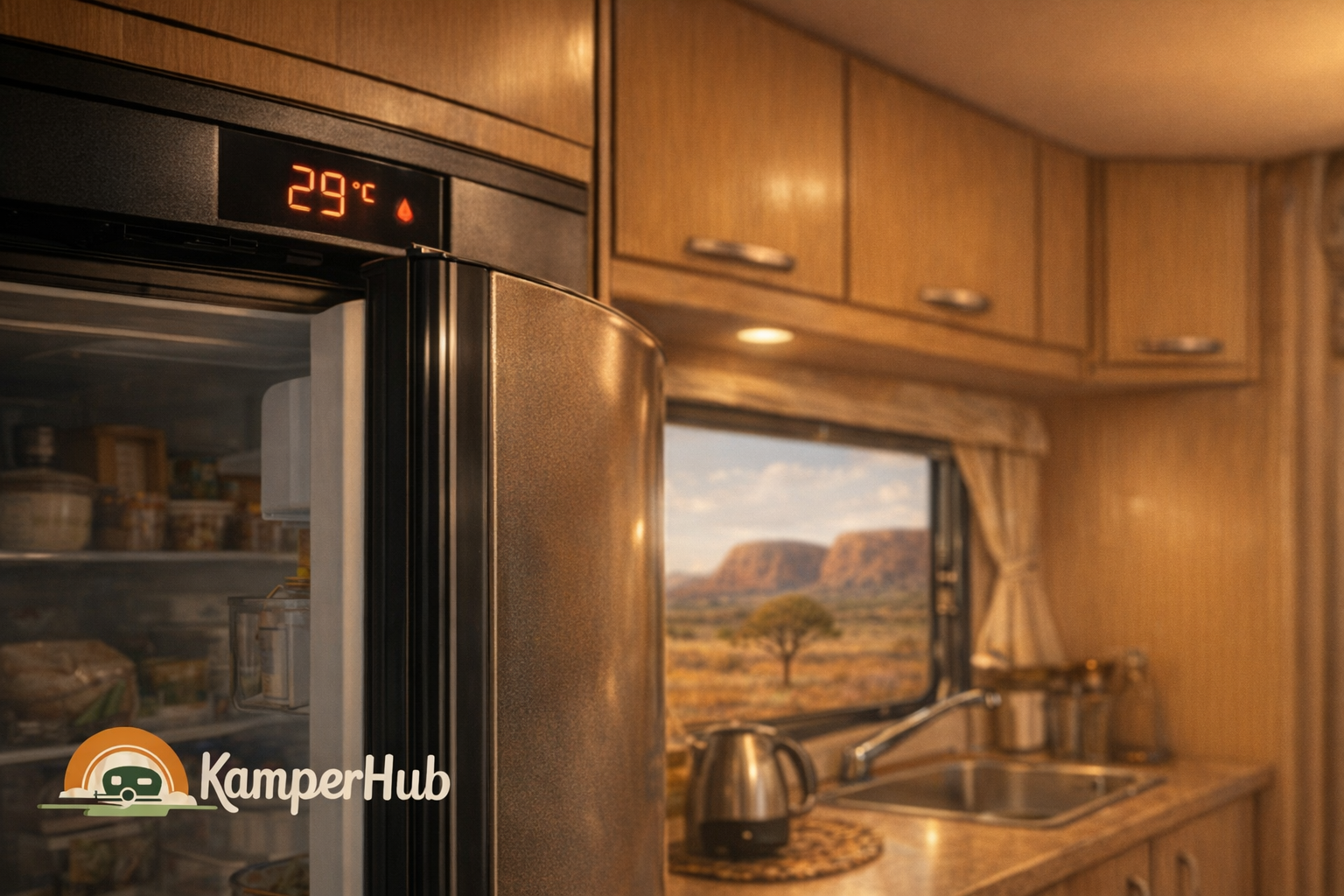
Caravan Fridge Temperature Rising Off-Grid? Here's What to Check
Your fridge was fine yesterday. Now the temperature is creeping up and nothing you do seems to stop it. If you're new to off-grid camping, don't panic — this is one of the most common problems caravanners face, and it's almost always fixable.
Here are the most likely causes and what to do about each one.
1. Your Battery Is Getting Low
This is the number one cause of a rising fridge temperature off-grid. Here's why:
Your 12V compressor fridge needs a steady power supply. As your battery voltage drops below about 12.0V, the fridge compressor struggles to maintain temperature. Some fridges have a built-in low-voltage cutoff that shuts the compressor off entirely to protect your battery — meaning your fridge just stops cooling without warning.
What to check:
- Look at your battery monitor. If voltage is below 12.2V, your battery is getting flat.
- Check if your solar panels are producing enough to keep up with the fridge draw (typically 3–5 amps).
- If you arrived late in the day, your solar may not have had time to top up the battery.
Quick fix: Start your vehicle and let the alternator charge the battery for 30–60 minutes. This will bring the voltage back up and the fridge should start cooling again.
Long-term fix: Use our Power System Planner to check if your solar panel and battery setup can actually support your fridge 24/7 off-grid. Many setups are undersized for continuous fridge use.
2. You're Running on Gas and the Bottle Is Low
Planning your next road trip?
KamperHub helps you plan routes, track weights, and travel with confidence. Free to use — no credit card required.
Get Started FreeIf your fridge runs on gas (3-way absorption fridge), a gradually rising temperature often means your gas bottle is running low. The flame gets smaller as pressure drops, reducing cooling capacity.
What to check:
- Weigh your gas bottle or check the gauge if you have one.
- Look at the flame — it should be a steady blue. If it's flickering, yellow, or barely visible, gas is low.
- Check that the gas valve is fully open.
Quick fix: Switch to a full bottle. Always carry a spare when camping off-grid.
Tip: Our Gas Usage Calculator can estimate how long your bottle will last based on your fridge and cooking usage.
3. Poor Ventilation Behind the Fridge
Fridges generate heat when they cool. That heat needs to escape — usually through vents at the top and bottom of the fridge cavity. If those vents are blocked or there isn't enough airflow, heat builds up and the fridge can't cool efficiently.
What to check:
- Feel the area behind and above the fridge. Is it extremely hot?
- Are the external vents clear of obstructions (towels, bags, insect screens clogged with dust)?
- Is the caravan parked with the fridge side facing direct sun?
Quick fix:
- Clear any obstructions from the fridge vents.
- Park with the fridge side in the shade if possible.
- On very hot days, place a small 12V fan near the upper vent to help move hot air out.
4. The Fridge Is Overpacked or Warm Food Was Added
A fridge packed to the brim can't circulate cold air properly. And if you loaded in warm food or drinks, the fridge has to work much harder to bring everything down to temperature.
What to check:
- Can you see air gaps between items? Cold air needs to circulate.
- Did you recently load warm items (like a big shop or an esky transfer)?
Quick fix:
- Remove unnecessary items.
- Pre-chill food and drinks before loading them in.
- Leave space around the shelves for airflow.
5. Door Seal Is Worn or Not Sealing
A worn or dirty door seal lets cold air escape and warm air in. Over time, seals can crack, flatten, or get dirty enough to lose their grip.
What to check:
- Close the door on a piece of paper. If you can pull the paper out easily, the seal isn't tight enough.
- Run your hand around the closed door — can you feel cold air escaping?
- Look at the seal for cracks, tears, or food residue.
Quick fix:
- Clean the seal with warm soapy water and dry it.
- If the seal is cracked or flattened, order a replacement (usually $30–$80 depending on your fridge model).
6. Ambient Temperature Is Too High
On very hot days (35°C+), your fridge has to work much harder. Compressor fridges can typically maintain a 30–35°C difference from ambient. So if it's 40°C outside, the best your fridge might manage is around 5–8°C inside.
What to check:
- What's the outside temperature? Extreme heat makes every fridge struggle.
- Is the caravan in full sun with no shade?
Quick fix:
- Park in the shade or use an awning.
- Avoid opening the fridge unnecessarily — every open loses cold air fast.
- Put a wet towel over the external fridge vent (top) to help with evaporative cooling (works in dry climates).
- Set the fridge to a colder setting before the heat of the day.
7. The Fridge Isn't Level
Absorption (3-way) fridges rely on gravity to circulate the refrigerant. If your caravan isn't level, the cooling cycle is less efficient and the fridge temperature will rise.
What to check:
- Is your caravan reasonably level? A spirit level on the fridge shelf will tell you.
- Absorption fridges typically need to be within 3° of level to work properly.
Quick fix: Level your caravan using levelling ramps or chocks. Compressor fridges aren't affected by this — they work at any angle.
When to Worry
If you've checked all of the above and the fridge still won't cool:
- Compressor not running: Listen for the compressor. If it's silent and the fridge is on, the compressor may have failed or the control board has a fault.
- Gas fridge not cooling on any setting: The cooling unit may need regassing or replacing. This is a common end-of-life issue for absorption fridges.
- Fridge cools on 240V but not 12V or gas: This points to a specific power source issue, not the fridge itself.
In these cases, you'll need a caravan fridge technician. Most caravan service centres can diagnose the issue.
Quick Reference Checklist
| Check | What to Look For |
|---|---|
| Battery voltage | Above 12.2V? |
| Solar output | Panels producing? Shade on panels? |
| Gas bottle | Full or nearly empty? |
| Fridge vents | Clear and unobstructed? |
| Fridge level | Within 3° of level? |
| Door seal | Tight and clean? |
| Packing | Air gaps between items? |
| Ambient temp | Is it an extreme heat day? |
Plan Your Power System
If you're finding your battery can't keep up with your fridge off-grid, your solar and battery setup might be undersized. Use our free Power System Planner to design a system that actually matches your needs — it takes about 5 minutes and shows you exactly what panels and batteries you need.
You can also check our Fridge Size Calculator to see what size fridge suits your travel style and how much power it will draw.
Related Guides
- How to Set Up an External Fridge Without Killing Your Battery
- How to Size Your Caravan Power System (Without Getting It Wrong)
- Best Dual Zone Fridge Freezers for Caravans
Useful Resources
Join the Conversation
Found this helpful? Try KamperHub — it's free
Weight tracking, trip planning, and towing compliance — all in one app.
KamperHub Team
Helping travellers tow safely and confidently. KamperHub provides tools for trip planning, weight compliance, and adventure management.
Plan Your Next Caravan Adventure with KamperHub
Trip planning, weight tracking, fuel management, and more. Everything you need for safe and confident towing.
Get Started Free