What You Can't Take Across State Borders — The Caravanner's Quarantine Guide
Why Quarantine Rules Matter for Caravanners
If you've ever driven across a state border in Australia, you've probably seen the quarantine bins. Maybe you've driven past them without thinking twice. But if you're caught with restricted items, you could cop fines of up to $22,000 in some states.
Quarantine rules exist to stop the spread of pests and diseases — particularly fruit fly, phylloxera (a vine pest), fire ants, and plant diseases that could devastate agriculture. As caravanners, we travel through multiple states with food, firewood, and plants, making us a high-risk group for spreading these pests.
The tricky part? Every state has different rules, and they change with the seasons.
The Big Three: What Gets Confiscated Most
Planning your next road trip?
KamperHub helps you plan routes, track weights, and travel with confidence. Free to use — no credit card required.
Get Started Free1. Fresh Fruit and Vegetables
This is the one that catches most travellers. Fruit fly is the main concern — the larvae hide inside fruit, and a single piece of contaminated fruit can start an infestation.
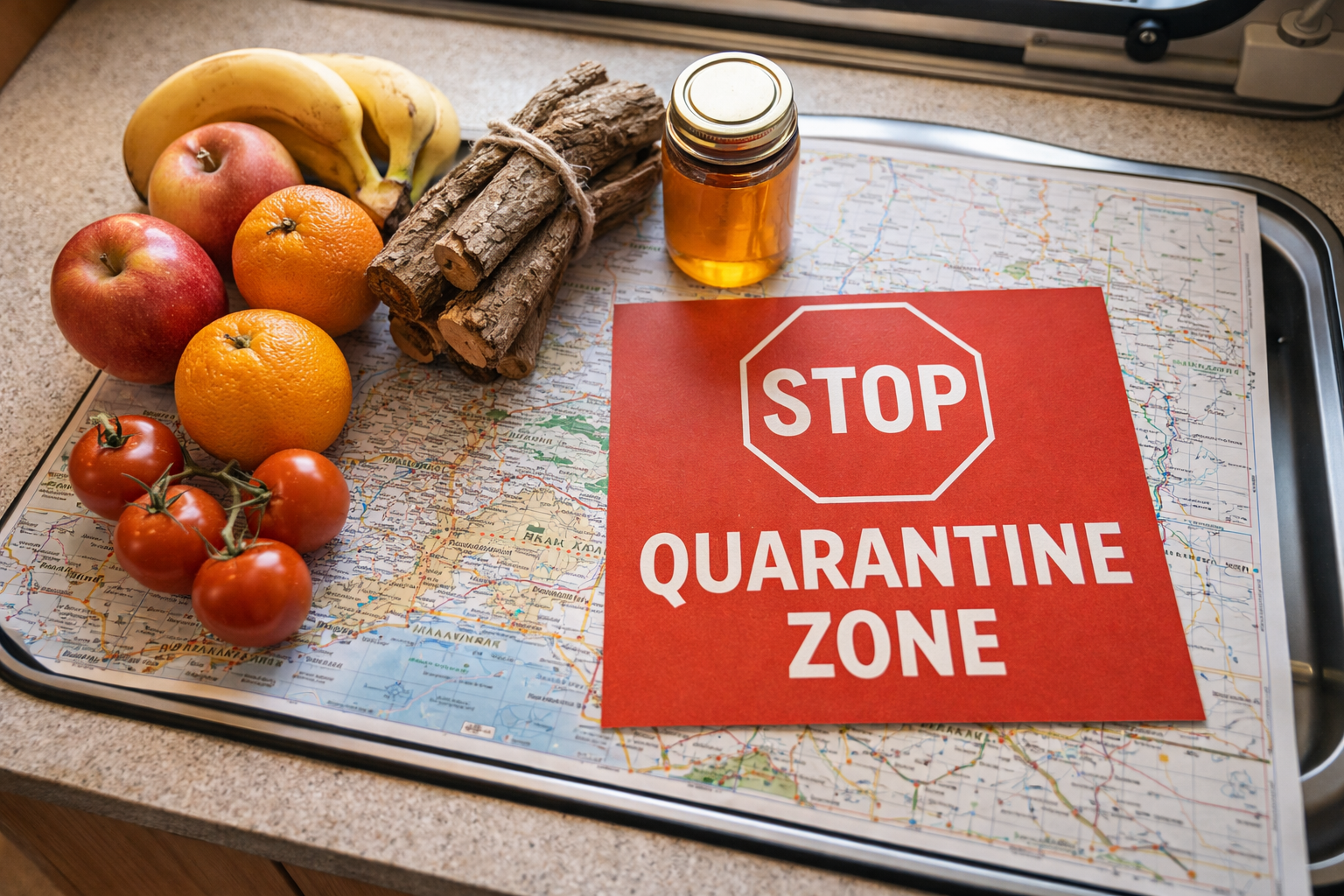
General rule: If you're entering a Fruit Fly Exclusion Zone, you cannot bring in host fruits (most stone fruit, citrus, tomatoes, capsicum, and many tropical fruits).
States with active fruit fly exclusion zones:
- South Australia — the strictest state. SA is fruit fly free and wants to stay that way. Virtually all fresh fruit and vegetables from eastern states are restricted.
- Victoria — parts of the state are exclusion zones, particularly in the north
- Tasmania — very strict. Almost all fresh produce from the mainland is restricted.
- Western Australia — strict border controls at Eucla (Nullarbor crossing) and Kununurra
Tips:
- Eat or discard fresh produce before crossing
- Check the quarantine bins at border crossings — no fines if you dispose voluntarily
- Tinned, frozen, dried, and commercially packaged foods are generally fine
- Buy fresh produce after you cross the border
2. Firewood
Never carry firewood across state borders. This is a rule that applies in virtually every state.
Firewood can harbour:
- Bark beetles and borers
- Termites
- Fungal diseases
- Fire ants (in Queensland)
The rule is simple: Buy firewood locally at your destination. Most caravan parks sell it, and many national parks have firewood collection areas.
Even within a single state, some national parks prohibit bringing in outside firewood. Always check the park rules when you arrive.
3. Honey and Bee Products
This one surprises people. Raw honey, honeycomb, and used beekeeping equipment are restricted in several states to prevent the spread of American foulbrood and other bee diseases.
- SA, TAS, and WA have the strictest rules
- Commercial, sealed honey from a supermarket is usually fine
- Raw honey from a roadside stall or farmers market might not be
State-by-State Quarantine Guide
South Australia
The strictest state in Australia.
SA is one of the few remaining fruit fly free areas in the country and enforces its borders aggressively.
Restricted items entering SA:
- Almost all fresh fruit and vegetables from eastern states
- Grape vine material
- Used fruit and vegetable packaging
- Honey and bee products
- Soil and potting mix
- Plants from some areas
Border checkpoints: Yamba (from VIC), Pinnaroo (from VIC), Oodla Wirra (from NSW), Ceduna (from WA direction — less strict this way)
Fines: Up to $5,000 for individuals
Victoria
Fruit fly exclusion zones in the north and west.
Restricted items:
- Host fruits entering exclusion zones (stone fruit, citrus, tomatoes, capsicum)
- Firewood from interstate
- Phylloxera-host material (grape vines) from infested zones
Key areas: The Greater Sunraysia and Goulburn Valley fruit fly exclusion zones are the main ones. Check the Agriculture Victoria website for current maps.
New South Wales
Generally the most relaxed, but still has rules.
Restricted items:
- Firewood across all borders
- Some plant material into pest-free areas
- Grape vine material from phylloxera zones
Note: NSW does have seasonal fruit fly management areas, especially near the SA and VIC borders.
Queensland
Fire ants are the big concern.
Restricted items:
- Soil, mulch, and potting mix from fire ant biosecurity zones (SEQ)
- Some plants from fire ant zones
- Firewood from interstate
Fire ant zones: Greater Brisbane, Gold Coast, Ipswich, Logan, Scenic Rim, Lockyer Valley. If you've been camping in these areas, check your gear for fire ants before heading south.
Western Australia
Very strict — similar to SA.
Restricted items entering WA:
- Fresh fruit and vegetables (most types)
- Honey and bee products
- Seeds, plants, and plant material
- Soil and potting mix
- Used fruit and vegetable containers
Border checkpoint: Eucla on the Nullarbor (staffed checkpoint) and Kununurra in the north.
Fines: Up to $22,000 for individuals — the highest in Australia.
Tasmania
Island state — takes biosecurity very seriously.
Restricted items:
- Almost all fresh fruit and vegetables from the mainland
- Seeds and plants
- Soil and potting mix
- Honey
- Firewood
How it works: Biosecurity screening happens at the Spirit of Tasmania terminal in Melbourne and at Launceston Airport. They can and do check caravans.
Northern Territory
More relaxed than southern states, but still has rules.
Restricted items:
- Some plant material
- Banana plants (panama disease prevention)
- Firewood restrictions in some areas
ACT
Follows NSW rules for the most part. No border checkpoints, but the same regulations apply if you're bringing in restricted items.
How to Check Current Rules
Quarantine rules change seasonally — fruit fly exclusion zones expand and contract depending on detections. Always check before you travel:
| State | Website |
|---|---|
| SA | pir.sa.gov.au/biosecurity |
| VIC | agriculture.vic.gov.au |
| NSW | dpi.nsw.gov.au |
| QLD | daf.qld.gov.au |
| WA | agric.wa.gov.au |
| TAS | nre.tas.gov.au |
| NT | nt.gov.au/industry |
Practical Tips for Caravanners
- Use up fresh produce before crossing borders — plan your meals around it
- Buy local at your destination — supports local growers too
- Never carry firewood — buy it where you camp
- Check the quarantine bins — they're at most border crossings, use them
- Keep receipts for produce — if questioned, you can show where you bought it
- Clean your caravan — soil on jacks, wheel chocks, and steps can carry pests
- Check under your caravan — fire ants and other pests can hitch a ride
- Plan your route — KamperHub's trip planner helps you map stops so you can time your produce purchases
What Happens If You Get Caught?
If you're caught with restricted items at a checkpoint:
- Voluntary disposal — no fine if you hand it over willingly
- Fines — range from $200 to $22,000 depending on the state and the item
- Court prosecution — for serious or repeat offences
- Vehicle inspection — officers can search your caravan
The best approach? Dispose voluntarily. No one gets fined for using a quarantine bin.
The Bottom Line
Quarantine rules exist to protect Australian agriculture — and they're taken seriously. As caravanners, we cover a lot of ground across multiple states, so it's worth getting this right.
Three simple rules:
- Eat your fruit before the border
- Never carry firewood
- Check the rules before you travel
Safe travels! 🏕️
Planning a cross-border trip? KamperHub's free route planner helps you map your stops and manage your trip — [get started free](https://app.kamperhub.com/signup).
Useful Resources
Join the Conversation
Found this helpful? Try KamperHub — it's free
Weight tracking, trip planning, and towing compliance — all in one app.
KamperHub Team
Helping travellers tow safely and confidently. KamperHub provides tools for trip planning, weight compliance, and adventure management.
Plan Your Next Caravan Adventure with KamperHub
Trip planning, weight tracking, fuel management, and more. Everything you need for safe and confident towing.
Get Started Free