
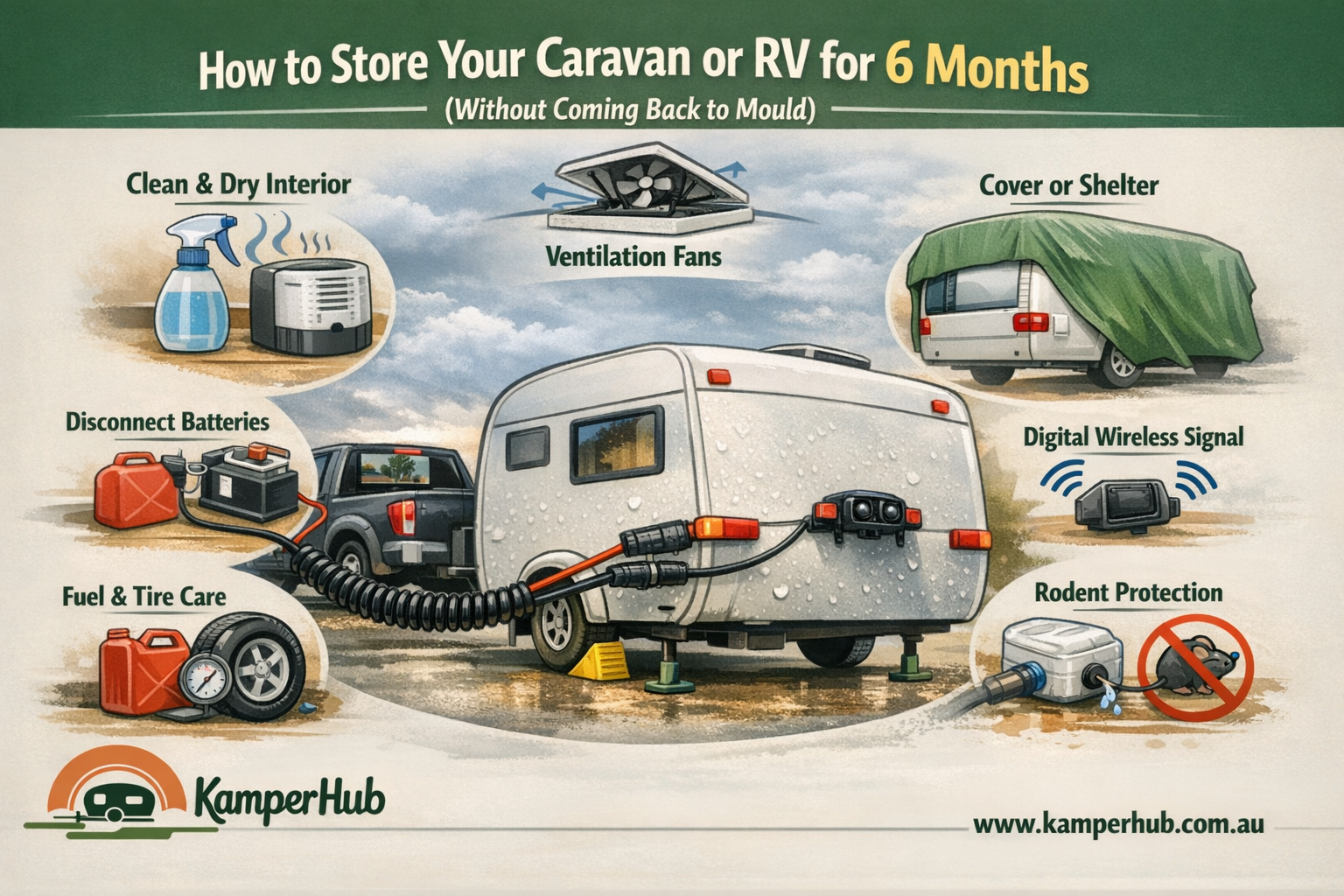
How to Store Your Caravan or RV for 6 Months (Without Coming Back to Mould)
Putting your caravan or RV into long-term storage? Whether it's over winter or while you take a break from travelling, how you prepare it makes all the difference. Leave it wrong and you'll come back to mould, flat batteries, seized brakes, and a musty smell that takes weeks to shift.
Here's a practical guide to storing your van properly — so it's ready to roll when you are.
1. Moisture is Your Biggest Enemy
Moisture causes mould, mildew, rust, and that unmistakable damp smell. It's the number one issue with stored caravans.
What works:
- DampRid hanging bags in wardrobes and refillable tubs in living areas — they last 2-3 months, far better than the cheap ones that need changing every few weeks
- Eva-Dry rechargeable dehumidifiers — no refills needed, just plug in to recharge every few weeks
- Solar-powered roof vent fans — keeps air circulating without needing mains power
- Leave all cupboard and wardrobe doors open — trapped air is where mould grows fastest
- Crack a window slightly with a mesh cover for airflow (if stored securely)
What doesn't work:
- Sealing the van completely shut with no ventilation
- Cheap moisture absorbers that need replacing every 2 weeks
- Relying on the van being "airtight" — no caravan is truly airtight
2. Clean Everything Before Storage
Planning your next road trip?
KamperHub helps you plan routes, track weights, and travel with confidence. Free to use — no credit card required.
Get Started FreeDon't store a dirty van. Food crumbs attract pests, and dirt holds moisture.
- Fridge: Empty completely, clean with bicarb, and leave the door propped open
- Kitchen: Wipe down all surfaces, empty cupboards of any food
- Bathroom: Clean the toilet cassette, dry the shower area
- Bedding: Remove all bedding, pillows, and soft furnishings if possible — or at minimum, stand mattresses on edge for airflow
- Exterior: Give the van a good wash and check seals for any cracks
3. Water System
- Drain all water tanks (fresh, grey, and black)
- Run taps until dry to clear the lines
- Add sanitiser if you plan to store for more than 3 months
- Leave taps in the open position to prevent pressure build-up
- Disconnect the water pump or turn it off at the switch
4. Gas and Electrical
- Turn off all gas bottles at the valve
- Disconnect the house battery or use a solar trickle charger to maintain it
- Turn off the main battery isolator
- Unplug all appliances — even on standby they drain power over months
- If you have access to mains power at your storage location, a battery maintainer (not a charger) keeps batteries healthy without overcharging
5. Tyres and Brakes
- Inflate tyres to maximum recommended pressure — they'll slowly lose air over months
- Move the van slightly every 4-6 weeks if possible, to prevent flat spots on tyres
- If you can't move it, consider tyre covers to protect from UV damage
- Release the handbrake and use wheel chocks instead — handbrakes can seize if left on for months
- Apply a light spray of brake cleaner to disc brakes to prevent surface rust
6. Exterior Protection
- Check all seals around windows, doors, hatches, and the roof — reseal anything cracked
- Apply a UV protectant to rubber seals to prevent drying and cracking
- Cover the van if stored outdoors — a breathable cover, not a tarp (tarps trap moisture)
- Close all vents and hatches except your designated ventilation point
- Retract the antenna and remove any external accessories that could blow off
7. Pest Prevention
- Block any gaps where mice or insects could enter — steel wool works well for small gaps
- Remove all food — including tinned goods (they attract rodents)
- Place pest deterrents inside — peppermint oil on cotton balls, mothballs, or ultrasonic deterrents
- Check underneath for any nesting spots and clear debris
8. Insurance and Security
- Check your insurance covers long-term storage — some policies have conditions about where and how the van is stored
- Lock hitch and wheel locks if stored in an unsecured area
- Take photos of the van's condition before storage for insurance records
- Remove valuables — don't leave anything worth stealing
Storage Checklist
Here's a quick checklist you can tick off before walking away:
- Van cleaned inside and out
- All food removed
- Fridge empty, clean, door propped open
- Water tanks drained, taps open
- Gas bottles turned off
- House battery disconnected or on trickle charger
- Cupboard and wardrobe doors open
- Moisture absorbers placed throughout
- Ventilation point set up
- Tyres inflated to max pressure
- Handbrake off, wheel chocks in place
- Seals checked and treated
- Pest deterrents in place
- Valuables removed
- Insurance checked
- Photos taken
When You Come Back
Before your first trip after storage:
- Check tyre pressures and look for flat spots or cracks
- Reconnect the battery and check voltage
- Turn on water and check for leaks
- Test all gas appliances — check connections for leaks with soapy water
- Run the fridge for 24 hours before loading food
- Check brakes — they may feel grabby at first, which is normal
- Inspect the roof for any damage from weather or falling branches
- Air out the van for a day before sleeping in it
Final Thought
The 30 minutes you spend preparing your van for storage saves you hours of cleaning, repairs, and frustration when you're ready to hit the road again. Your future self will thank you.
Planning your next trip? KamperHub's [trip planner](/route-planner) and [weight calculator](/weights) help you get ready faster — so you can spend less time preparing and more time on the road.
Useful Resources
Join the Conversation
Found this helpful? Try KamperHub — it's free
Weight tracking, trip planning, and towing compliance — all in one app.
KamperHub Team
Helping travellers tow safely and confidently. KamperHub provides tools for trip planning, weight compliance, and adventure management.
Plan Your Next Caravan Adventure with KamperHub
Trip planning, weight tracking, fuel management, and more. Everything you need for safe and confident towing.
Get Started Free