
CCTV for Your caravan: What to Buy, How to Power It, and What Actually Works
Why Add a Camera to Your Van?
Whether you want to keep an eye on your setup while you are away at the beach, deter sticky fingers at a free camp, or just have a reversing camera that doubles as security — adding a camera to your caravan is one of the most practical upgrades you can make.
But the options are overwhelming. Wired or wireless? Solar or 12V? Do you need WiFi? What actually works when you are off-grid?
Here is a no-nonsense guide to help you choose.
The Three Main Options
Planning your next road trip?
KamperHub helps you plan routes, track weights, and travel with confidence. Free to use — no credit card required.
Get Started Free1. Solar-Powered Wireless Cameras (Easiest Install)
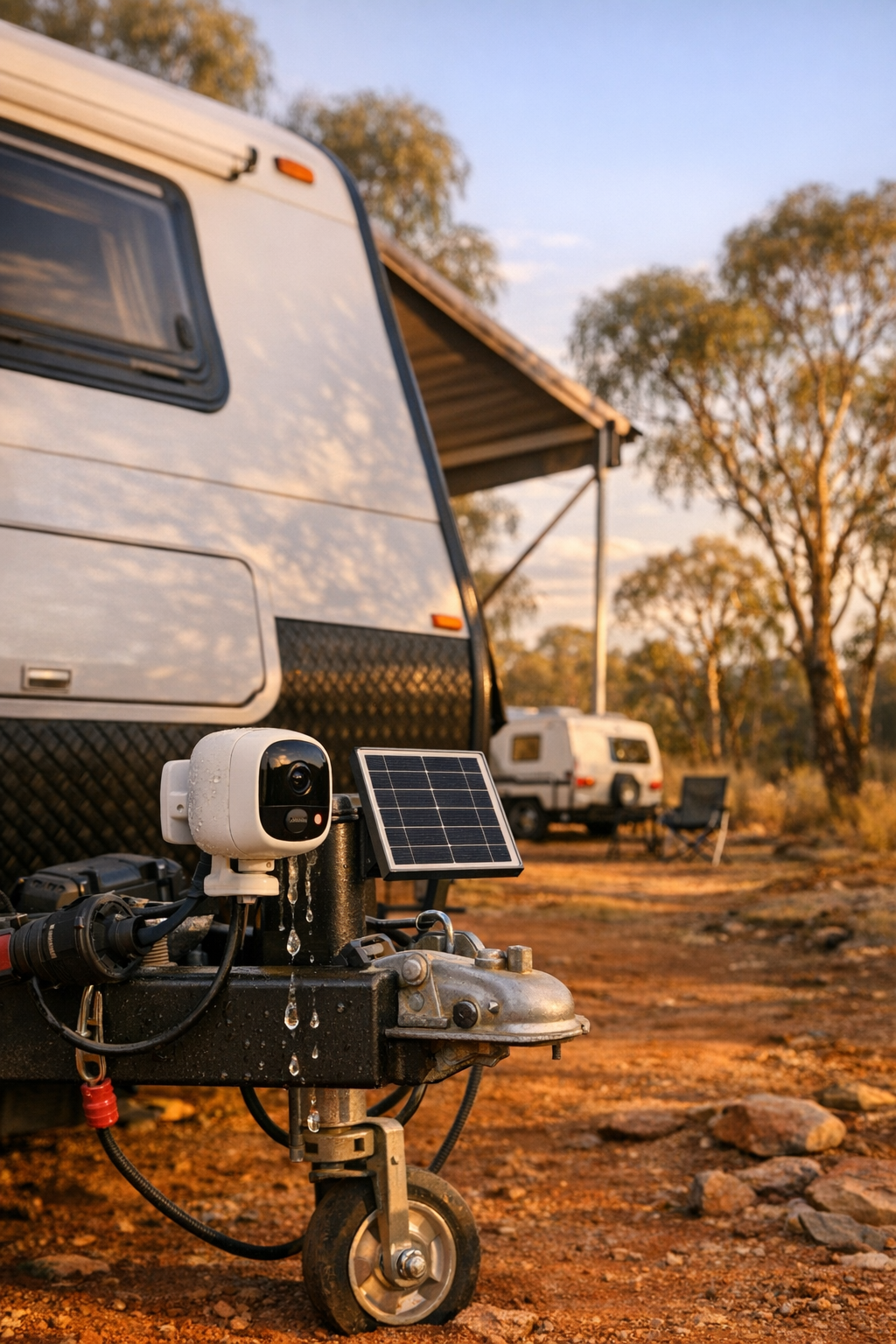
These are the most popular choice for caravans because they need no wiring at all. Stick the mount on, pair it with your phone, done.
Best for: Set-and-forget security at camp, monitoring your van while you are away exploring.
Popular models:
- Reolink Argus 3 Pro — solar panel + rechargeable battery, records to SD card or phone app. Great image quality, no subscription fees
- Eufy SoloCam S340 — dual lens with 360° pan, solar powered, local storage only (no cloud fees)
- Ring Stick Up Cam (Battery) — needs WiFi or a mobile hotspot, but the app is excellent
Pros: No wiring, easy to move between vehicles, solar keeps them charged Cons: Need decent sun for solar, WiFi-dependent models need a hotspot, some have slight delay on motion alerts
2. 12V Wired Systems (Most Reliable)
If you want 24/7 recording without worrying about battery life or sun, wiring into your van's 12V system is the way to go. These are especially popular as combined reversing camera and security setups.
Best for: Permanent install, continuous recording, reversing camera that doubles as security.
Popular models:
- Haloview MC7108 — 7" monitor + wireless camera, magnetic mount, runs off 12V. Popular dual-purpose choice
- Axis P3245-V — weatherproof dome camera, PoE powered, good for a permanent external mount
- Generic 12V reversing camera kits — many caravan owners add a second camera facing the awning side or entry door
Pros: Always on, no battery to manage, reliable Cons: Needs wiring (or pay an auto electrician), harder to move between vehicles
3. 240V Cameras (Powered Sites Only)
If you mostly stay at powered caravan parks, a standard home security camera works fine. Just plug it in.
Best for: caravan park regulars who want a simple, cheap option.
Popular models:
- TP-Link Tapo C200 — under $50, pan/tilt, night vision, SD card recording
- Wyze Cam v3 — weatherproof, cheap, good night vision
Pros: Cheapest option, easy setup, great image quality Cons: Only works on powered sites, useless off-grid
Power Source Breakdown
| Power Source | Best For | Limitations |
|---|---|---|
| Solar + battery | Free camps, off-grid | Needs sun, battery life varies |
| 12V van battery | Permanent install, always-on | Needs wiring, draws from house battery |
| USB power bank | Temporary, short stays | Needs regular recharging |
| 240V mains | Powered caravan parks | No use off-grid |
Tip: If you are running a solar camera, mount the panel where it gets morning sun — most security incidents happen overnight, so you want the battery fully charged by sunset.
Do You Need WiFi?
Short answer: Not always.
- Cameras with SD card recording (Reolink, Eufy) work without WiFi — they record locally and you review footage on the camera or via the app when in range
- Cloud-dependent cameras (Ring, Arlo, Wyze) need WiFi or a mobile hotspot to send alerts and store footage
- If you want live alerts on your phone while you are away from the van, you will need some form of internet — a Telstra prepaid mobile hotspot works well for this
For most caravan setups, a camera with local SD recording is the practical choice. You do not always have reliable internet at camp.
Where to Mount It
The best spots depend on what you want to monitor:
- A-frame or front wall — covers the hitch, petrol bottles, and toolbox area (high theft target)
- Awning rail or roof edge — wide angle view of the campsite
- Entry door area — captures anyone approaching the van
- Rear — doubles as a reversing camera
Most solar cameras come with magnetic or adhesive mounts that do not require drilling.
What About Insurance?
Some insurers offer a discount for having visible security cameras fitted. It is worth calling your provider to ask — even a 5% discount on caravan insurance adds up over a few years. Keep your purchase receipt as proof.
Our Recommendation
For most caravan owners, a Reolink Argus 3 Pro with solar panel is the best starting point. No wiring, no subscription fees, works off-grid, and the image quality is excellent. Mount it on the A-frame facing your setup and you have got a solid security camera for under $200.
If you want something more permanent, get a 12V wired system installed by an auto electrician and run it off your house battery. This gives you 24/7 coverage without thinking about it.
Useful Resources
- caravan Industry Association of Australia — industry standards and accredited installers
- Choice Security Camera Reviews — independent Australian product testing
- 12V Planet — 12V camera wiring guides and products
Join the Conversation
Found this helpful? Try KamperHub — it's free
Weight tracking, trip planning, and towing compliance — all in one app.
KamperHub Team
Helping travellers tow safely and confidently. KamperHub provides tools for trip planning, weight compliance, and adventure management.
Plan Your Next Caravan Adventure with KamperHub
Trip planning, weight tracking, fuel management, and more. Everything you need for safe and confident towing.
Get Started Free