
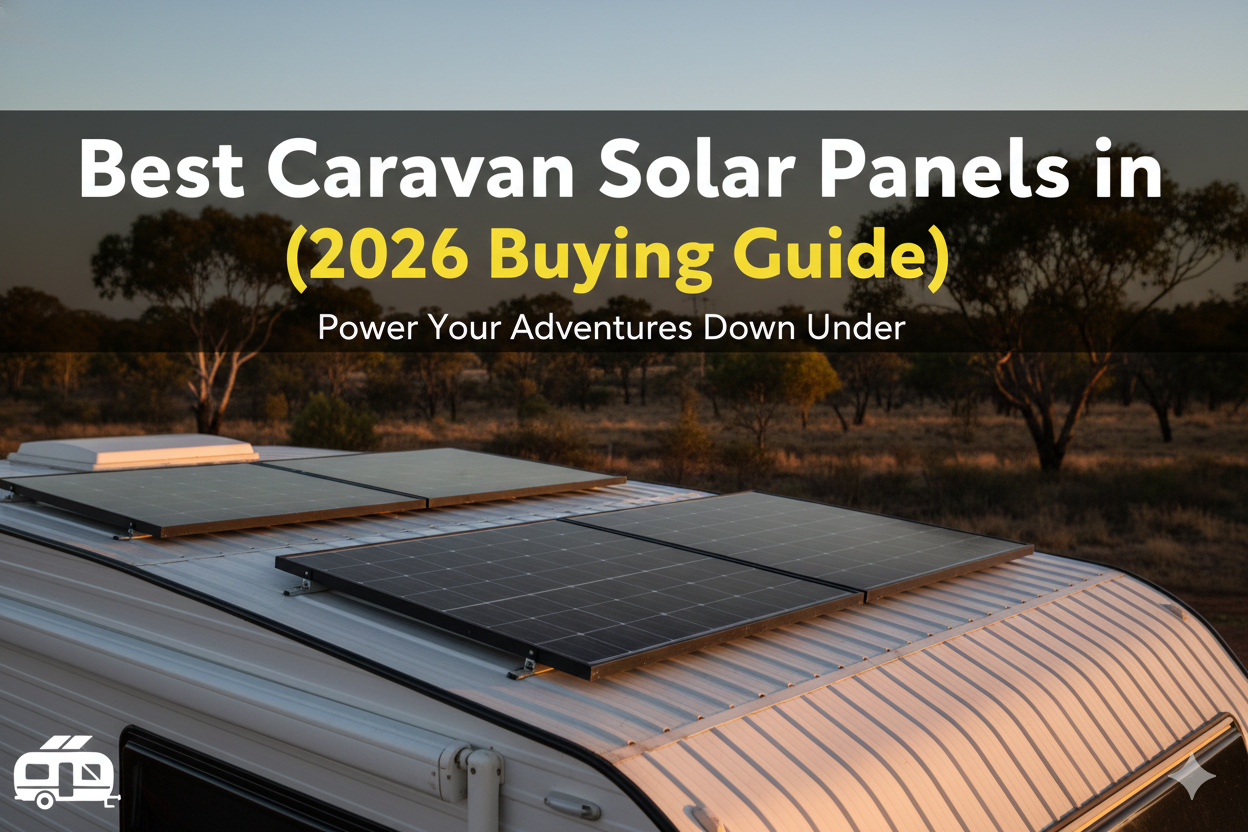
Best Travel Trailer Solar Panels in the US (2026 Buying Guide)
Why Every American Travel Trailer Needs Solar in 2026
If you're planning to free camp anywhere in the US — and let's be honest, that's where the best spots are — solar panels are no longer a luxury. They're essential.
Whether you're boondocking on a remote stretch of BLM land or parked up at a national park in the Rockies, a good solar setup means you can run your fridge, charge your devices, and keep your lights on without relying on powered sites.
How Much Solar Do You Actually Need?
Planning your next road trip?
KamperHub helps you plan routes, track weights, and travel with confidence. Free to use — no credit card required.
Get Started FreeThe answer depends on your setup, but here's a rough guide:
- Weekend warriors (1-2 nights): 100-200W
- Regular free campers (3-7 nights): 200-300W
- Full-time tourers: 300-500W+
- Running air con off-grid: 600W+ with lithium batteries
Rule of thumb: In American summer, a 100W panel produces roughly 400-500Wh per day. In winter, expect about half that.
Types of Travel Trailer Solar Panels
Rigid (Glass) Panels
The most common and cost-effective option. Mounted on your travel trailer roof with tilt brackets or flat.
- Pros: Cheapest per watt, longest lasting (25+ year lifespan), most efficient
- Cons: Heavy (18-26 lb per panel), need roof space, fixed mounting
- Best for: travel trailers with good roof space, permanent installations
Flexible Panels
Thin, lightweight panels that bend to fit curved surfaces.
- Pros: Lightweight (4.4-6.6 lb), easy to install, low profile
- Cons: Shorter lifespan (5-10 years), less efficient, more expensive per watt
- Best for: Pop-tops, campervans, weight-conscious setups
Portable/Folding Panels
Foldable panels in a carry case that you set up outside your trailer.
- Pros: Can angle towards the sun, no roof mounting needed, use across multiple vehicles
- Cons: Must set up and pack away, risk of theft, takes up storage space
- Best for: Renters, people who park in shade but can place panels in sun
Top Solar Panel Brands for American travel trailers
1. REDARC
A long-standing name in 12V power. Their solar range is built for harsh touring conditions.
- 150W Fixed Panel
- 200W Folding Kit
- Excellent warranty and local support
2. Victron Energy
Dutch company with a cult following among serious tourers. Their SmartSolar MPPT controllers are arguably the best in the business.
- BlueSolar panels from 90W to 360W
- App-based monitoring via Bluetooth
- Premium pricing but exceptional quality
3. iTechWorld
Popular American online retailer offering great value panels and complete kits.
- 200W Folding Panel Kit
- 12V Mono panels for roof mounting
- Good entry-level option
4. Baintech
Another brand gaining popularity, especially for their folding panel kits and lithium battery combos.
- 200W Folding Kit
- Pre-wired with Anderson plugs
- Solid build quality
Solar Charge Controllers: PWM vs MPPT
Don't skimp on the controller — it's the brain of your solar system.
- PWM (Pulse Width Modulation): Cheaper, simpler, 75-80% efficiency. Fine for small setups under 200W.
- MPPT (Maximum Power Point Tracking): More expensive, 95-99% efficiency. Worth it for any setup over 200W.
For most travel trailer setups, an MPPT controller (like the REDARC BMS1230S2 or Victron SmartSolar) pays for itself in extra power harvested.
Installation Tips
- Tilt your panels — even 10 degrees improves winter output by 20-30%
- Keep panels clean — dust and bird droppings dramatically reduce output
- Use adequate wire gauge — voltage drop over long cable runs kills efficiency
- Fuse everything — both positive leads should be fused near the battery and panels
- Consider a DC-DC charger — charges from your tow vehicle alternator while driving, complementing solar
How to Calculate Your Power Budget
Before buying, work out your daily usage:
- List every device you'll use (fridge, lights, phone charger, water pump, TV)
- Multiply watts x hours of daily use = Wh per day
- Add them all up for your total daily consumption
- Divide by expected solar harvest per 100W panel
- That gives you your panel requirement
Example: A typical travel trailer uses 800-1200Wh per day. In summer, 300W of solar covers this easily. In winter, you might need 400-500W or supplement with driving.
The Bottom Line
Solar is the best investment you can make for off-grid RVing in the US. Start with more than you think you need — you'll always find more things to power.
For a complete breakdown of your travel trailer's power needs, use the KamperHub Solar Calculator to size your system correctly.
Prices are approximate and based on January 2026 American retail. Always check current pricing and availability.
Join the Conversation
Found this helpful? Try KamperHub — it's free
Weight tracking, trip planning, and towing compliance — all in one app.
KamperHub Team
Helping travelers tow safely and confidently. KamperHub provides tools for trip planning, weight compliance, and adventure management.
Plan Your Next RV Adventure with KamperHub
Trip planning, weight tracking, fuel management, and more. Everything you need for safe and confident towing.
Get Started Free