
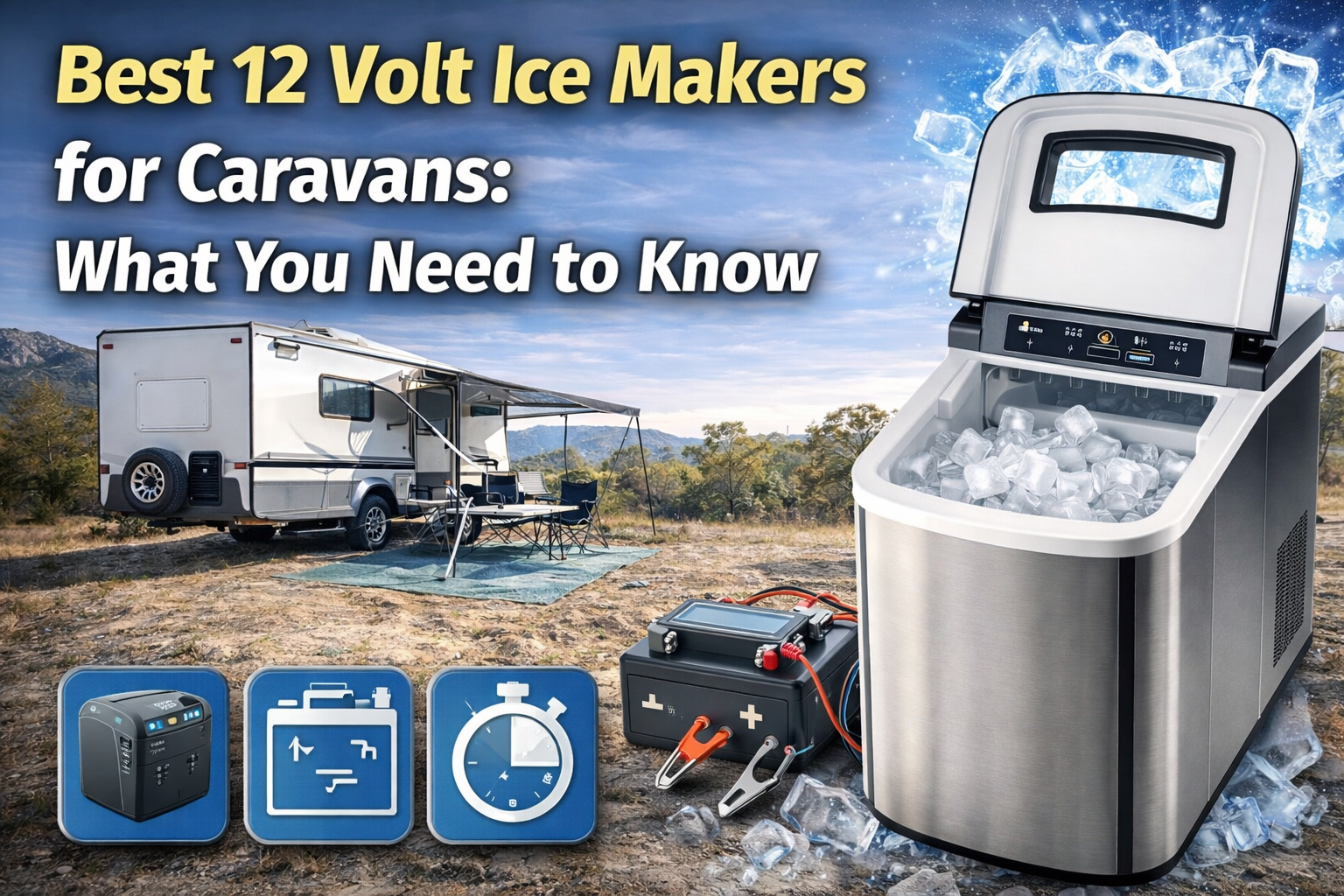
Best 12 Volt Ice Makers for Caravans: What You Need to Know
If you've ever been sitting at camp on a hot day wishing you had ice for your drinks, you're not alone. It's one of the most common questions in caravan groups: "Can anyone recommend a 12 volt ice maker for the van?"
The short answer is yes — they exist, but there are a few things worth knowing before you buy.
True 12V Ice Makers vs 240V with an Inverter
This is the most important distinction. There are two ways to make ice in your van:
- True 12V/24V DC ice makers — plug directly into your battery system, no inverter needed
- 240V AC ice makers — cheaper to buy, but require an inverter (or shore power) to run
If you're free camping or off-grid regularly, a true 12V unit is the better option. If you're mostly in powered caravan parks, a cheap 240V unit will do the job.
The Main 12V Option: Road Chef 12/24V Ice Maker
Planning your next road trip?
KamperHub helps you plan routes, track weights, and travel with confidence. Free to use — no credit card required.
Get Started FreeThe Road Chef is the most widely available true 12V ice maker in Australia. It's sold through multiple Aussie retailers including Outback Equipment, 12 Volt Direct, Carac, and Road Runner Offroad.
Road Chef Specs
| Feature | Detail |
|---|---|
| Voltage | 12V / 24V DC (dual voltage) |
| Ice Production | Up to 12kg per 24 hours |
| Cycle Time | ~10 minutes per batch |
| Ice Sizes | 3 sizes (bullet-shaped) |
| Water Tank | 2.2 litres |
| Weight | 9.6 kg |
| Dimensions | 340 x 328 x 360 mm |
| Build | 304 stainless steel + plastic |
| Price | ~$389 AUD |
What Owners Say
Most owners love the convenience — fresh ice in 10 minutes without needing shore power. One reviewer summed it up: "Having a G&T as the sun goes down is a game changer."
The main criticism is power consumption. Some owners find it draws more than expected, so you'll want a decent battery setup behind it.
How It Works
Fill the 2.2L reservoir with clean water, place the ice basket inside, select your cube size, and hit go. The compressor freezes water around prongs to create bullet-shaped cubes. The first few batches produce smaller cubes, but they get thicker as the reservoir water cools down.
One thing to note: the ice basket isn't actively cooled, so ice will slowly melt and drip back into the reservoir. Transfer your ice to an esky or insulated container to keep it longer.
Budget Alternative: 240V Ice Makers with an Inverter
If $389 is more than you want to spend, a 240V countertop ice maker from Bunnings or Kmart is a fraction of the price. You'll need an inverter to run it off your battery, but if you already have one in the van, this can work well.
Best Budget Options
Devanti 2.4L 12kg Ice Maker (Bunnings) — This is the standout budget pick because it only draws 90 watts. That's incredibly low for a 240V ice maker and means even a small inverter can handle it.
Devanti 2L Ice Maker (Bunnings) — Produces up to 12kg per day, 9 cubes per cycle in 6-13 minutes. Draws 240W, so you'll need a slightly larger inverter.
Advwin Portable Ice Maker (Kmart) — Another budget option producing 12kg per 24 hours.
X-BULL 2.2L Ice Maker — Available from around $125 at X-BULL's own store, or through Big W and Caravan RV Camping. Draws 240W on 240V. Good reviews, but it's not a 12V unit despite being marketed to the caravan crowd.
Quick Comparison
| Model | Voltage | Power Draw | Price (approx) | Best For |
|---|---|---|---|---|
| Road Chef | 12V/24V DC | ~48W | $389 | Off-grid, no inverter needed |
| Devanti 2.4L 90W | 240V AC | 90W | ~$100-$150 | Budget pick, inverter-friendly |
| Devanti 2L | 240V AC | 240W | ~$80-$120 | Powered sites or larger inverter |
| X-BULL 2.2L | 240V AC | 240W | ~$125 | Budget, powered sites |
Power Consumption: What Your Battery Can Handle
This is where most people come unstuck. An ice maker runs its compressor continuously during ice production, so you need to think about sustained draw, not just peak watts.
True 12V Units (~48W / 4 amps)
- Running for 4 hours uses roughly 16 amp-hours of battery
- A 100Ah lithium battery could run it for around 20 hours
- A 100Ah AGM battery (only use to 50%) gives you about 10 hours
- Solar can offset most of the draw during daylight
240V Units via Inverter
- A 90W ice maker through an inverter draws roughly 10 amps at 12V (accounting for inverter losses)
- A 240W unit draws roughly 25 amps at 12V — that's significant
- You'll also need to account for the inverter's startup surge when the compressor kicks in
- An 800W+ pure sine wave inverter is recommended for reliability
Battery Tips
- Never run from your starter battery — always use a house/auxiliary battery
- Avoid cigarette lighter sockets for sustained loads — they overheat and have a 15A limit
- Wire directly to your battery or via an Anderson plug for best results
- Voltage matters — compressors at low voltage draw more amps and can burn out. Keep your battery above 12.2V
- Solar helps — even a 200W panel can offset most of the ice maker's draw during the day
Tips for Getting the Most from Your Ice Maker
- Pre-chill your water — cold water from the fridge makes ice faster and uses less power
- Run it in the morning when your batteries are full from overnight charging or solar is starting up
- Transfer ice to an esky — the ice basket isn't insulated, so ice melts quickly if left in the machine
- Ventilation is key — leave space around the sides and back of the unit, just like a fridge
- Clean regularly — mineral buildup reduces efficiency. A rinse with diluted white vinegar every few weeks keeps it running well
- Don't overfill — stay below the MAX line or you'll get water overflow during the freezing cycle
The Verdict
If you free camp regularly and want hassle-free ice without an inverter, the Road Chef 12/24V at around $389 is the go-to choice in Australia. It's purpose-built for 12V systems and widely available.
If you're on a tighter budget and already have an inverter in the van, a Devanti 90W from Bunnings for under $150 is hard to beat. The low wattage makes it the most battery-friendly 240V option available.
Either way, make sure your battery system can handle the sustained draw, and always transfer your ice to an insulated container to make it last.
Useful Resources
Join the Conversation
Found this helpful? Try KamperHub — it's free
Weight tracking, trip planning, and towing compliance — all in one app.
KamperHub Team
Helping travellers tow safely and confidently. KamperHub provides tools for trip planning, weight compliance, and adventure management.
Plan Your Next Caravan Adventure with KamperHub
Trip planning, weight tracking, fuel management, and more. Everything you need for safe and confident towing.
Get Started Free